
Call Us: 219.440.2116
Why Façade Tolerance Matters on Mission-Critical Buildings
Mission-critical buildings — particularly data centers — operate in a world where downtime is measured in millions of dollars per hour. While much of the focus naturally centers on servers, cooling infrastructure, and electrical redundancy, the building envelope plays an equally vital role in performance.
One overlooked but decisive factor? Façade tolerance.
At Johns Architectural Metal Solutions, we’ve learned that tolerance control isn’t cosmetic — it’s operational.
What Is Façade Tolerance?
Façade tolerance refers to the acceptable variation in:
- Structural framing alignment
- Subframing installation
- Panel fabrication dimensions
- Attachment clip spacing
- Joint width consistency
- Plumb, level, and projection alignment
In conventional commercial construction, minor deviations may be absorbed visually. On mission-critical buildings, those same deviations can cascade into major coordination, sequencing, and performance issues.
1. Coordination with MEP Infrastructure
Mission-critical facilities are dense with:
- Redundant mechanical systems
- High-capacity electrical feeds
- Cable trays and penetrations
- Large louvered or screened mechanical yards
If the façade support system is out of tolerance:
- Screen walls may not align with mechanical openings
- Louver systems may not seat properly
- Insulated panel joints can misalign with interior framing
The result? Delays, rework, and field modifications — all of which threaten schedule certainty.
2. Water & Air Performance Is Not Forgiving
In hyperscale environments, even minor water intrusion can cause:
- Insulation degradation
- Mold or condensation issues
- Corrosion in structural members
- Damage to sensitive interior systems
Façade tolerances directly affect:
- Joint compression
- Sealant depth
- Gasket performance
- Drainage plane continuity
A 1/8” misalignment at subframing can multiply across large panel runs. In large-format ACM or plate systems, IMPs and single skiing panels, accumulated deviation becomes structural stress.
Mission-critical buildings do not allow envelope improvisation.
3. Thermal Movement & Expansion
Large aluminum panel systems — especially in long horizontal runs — experience measurable thermal expansion.
If:
- Clips are misaligned
- Joints are inconsistent
- Support rails are not true
Panels bind instead of float.
That creates:
- Oil-canning
- Fastener stress
- Joint distortion
- Premature system fatigue
In data centers where buildings often stretch hundreds of feet uninterrupted, tolerance control is a structural issue, not a finish issue.
4. Schedule Compression Leaves No Margin for Error
Data center builds are aggressively sequenced.
Exterior enclosure affects:
- Dry-in
- Interior trade access
- Equipment delivery
- Commissioning timelines
If façade tolerances are off:
- Panels don’t fit
- Fabrication needs rework
- Field adjustments delay installation
Unlike traditional projects, there is rarely float in the schedule.
Mission-critical construction rewards teams that measure twice — and build once.
5. Security & NDA Environments Limit Rework
Secure sites restrict:
- Photography
- Redesign circulation
- Trade stacking
- Extended field modifications
Tolerance discipline must be built into:
- Preconstruction coordination
- Shop drawing development
- Fabrication precision
- Field verification
There is limited appetite for “we’ll fix it in the field” on secure projects.
6. The Scale Magnifies Everything
On a small commercial façade, 1/4” drift may go unnoticed.
On a 400-foot data center elevation, that drift compounds into inches.
Large panel formats amplify:
- Bowing
- Cumulative misalignment
- Shadow-line inconsistency
- Structural stress on clips
Precision becomes non-negotiable.
What Tolerance Discipline Looks Like
On mission-critical façades, it means:
- Laser layout verification
- Early subframing inspection
- Controlled clip spacing
- Panel-specific fabrication checks
- Alignment confirmation before full runs
- Continuous QA/QC oversight
It means understanding that the façade is not decorative — it is part of a high-performance system.
Final Thought: Precision Protects Performance
Mission-critical buildings are designed around redundancy, control, and risk mitigation.
The façade must operate under the same philosophy.
Tolerance discipline protects:
- Schedule
- Performance
- Waterproofing integrity
- Thermal movement capacity
- Long-term durability
In environments where uptime is paramount, precision is not optional.
It’s foundational.
If your team is planning a mission-critical build and evaluating façade partners, consider this:
The difference between a clean install and a cascading coordination issue often comes down to tolerance control.
And in mission-critical construction, small details carry enormous consequences.
Posts You May Also Like
The Role of Contemporary Fabricators in the Design Process
The role of the fabricator has changed. No longer brought in at the tail end of a project, contemporary fabricators now…
How Insulated Metal Panels Contribute to Sustainable Buildings
Sustainability has become a core focus for modern construction. Developers and architects actively seek materials that reduce environmental impact while maintaining…
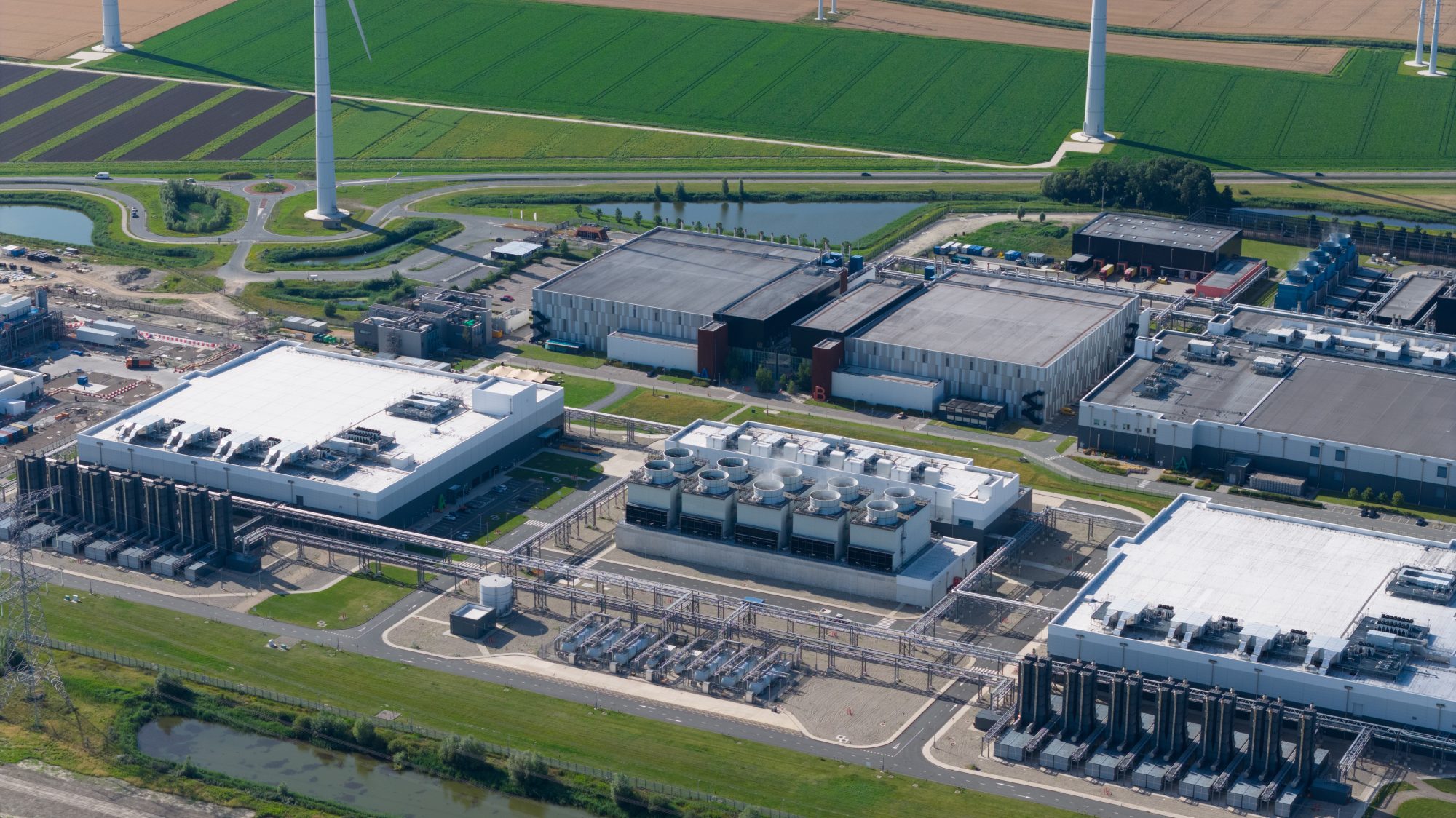
Why Data Center Owners Benefit from a Single-Source Façade Partner
How Johns Architectural Metal Solutions and JAM Panel ACM Reduce Risk, Improve Control, and Support Mission-Critical Schedules When people think about…
Get an instant JAM Panel ACM/MCM estimate online.
Contact Us Today



Call 219.440.2116
Fax 219.695.0779
Address 800 E Porter St, Crown Point, IN 46307
Mail RFQ@jam-sol.com
NUVEW | Copyright 2026 All Rights Reserved | Privacy statement | Accessibility Notice
The information on this website is for informational purposes only; it is deemed accurate but not guaranteed. It does not constitute professional advice. Testimonials are not a guarantee, warranty or prediction of what your experience with us will be. By providing contact information, users acknowledge and give explicit consent to be contacted via the methods of communication provided, including SMS. Message and data rates may apply. Message frequency may vary. Reply STOP to opt out.